

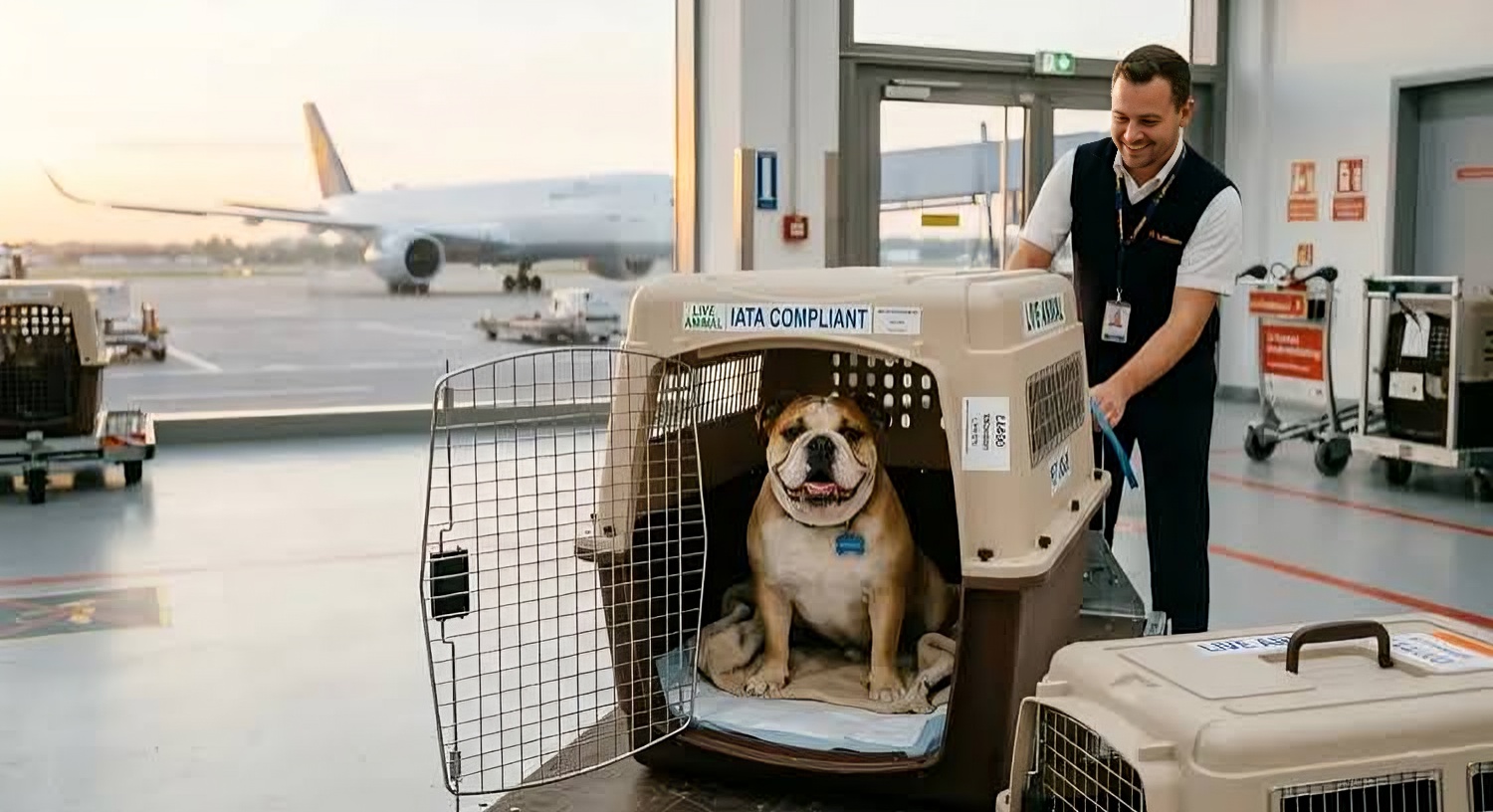

Professional canine transport services ensuring safe journeys for every trip

Canine transport services help owners coordinate domestic and international dog travel through structured planning and professional support. Depending on the transport requirements, this can include ground or air transport, crate preparation, veterinary documentation, airline procedures, and destination delivery. This guide covers the main services, process, costs, safety standards, and booking considerations.

1. Introduction to Canine Transport Services
Understanding canine transport begins with reviewing the services provided and the journeys that may require professional support.
1.1 What Are Canine Transport Services?
Canine transport services coordinate road or air travel for domestic moves, airport transfers, regional travel, and international relocations. Support can include collection, route planning, airline coordination, document review, and destination delivery, with international travel often involving veterinarians, airlines, authorities, and local handling partners.
1.2 Why Owners Use These Services
Owners may manage short and straightforward trips independently. Longer or cross-border relocations, however, often involve airline policies, veterinary preparation, document deadlines, and multiple transport stages.
Professional support allows these tasks to be coordinated through a structured travel plan. It can be particularly valuable for:
- Domestic and regional relocations
- International and cross-border travel
- Airport transfers and flight connections
- Multiple dogs or dogs requiring individual support
The appropriate service depends on the dog’s health, size, breed, destination, travel duration, and support needs.
2. Types of Canine Transport Services
Canine transport can be arranged by road, air, or through an accompanied flight concierge service. The appropriate option depends on the travel distance, route conditions, airline policy, and level of individual assistance required.

2.1 Canine Ground Transport Services
Canine ground transport services are commonly used for domestic relocations, regional journeys, airport transfers, and routes that can be completed safely by road. Dogs may travel in a private or shared vehicle, subject to the provider’s service model and route conditions.
Door-to-Door Dog Transport
Door-to-door transport provides pickup from the owner’s location and delivery to the destination. This can simplify logistics for owners who need support coordinating multiple stages of a relocation.
This service may be suitable for:
- Domestic relocations
- Regional moves
- Airport transfers
- Cross-border journeys where road transport is permitted
For extended road trips, the travel plan should specify rest stops, water access, temperature management, crate security, and procedures for monitoring the dog’s condition. The provider should also explain how delays, vehicle changes, or overnight stops will be handled.
2.2 Canine Air Transport Services
Air transport is generally used for international relocations or situations where road travel is impractical. Available travel categories are determined by the airline’s policy, route, aircraft type, and the dog’s size. They can include:
- Manifest cargo
- Checked baggage, where offered
- In-cabin travel, where permitted
Availability varies by airline, aircraft type, route, and the dog’s size, so the accepted travel category should be confirmed before booking. Professional support can cover airline reservations, airport handling, transit planning, veterinary coordination, documentation review, customs procedures where applicable, and destination handover.
Dogs with age, health, anxiety, or breed-related considerations may require additional assessment before air travel.
2.3 Canine Flight Concierge Services
Canine flight concierge services provide personalised assistance throughout an air travel. Under an accompanied service, a pet travel specialist can travel on the same itinerary and manage designated procedures at departure, transit, and arrival points.
Support may include:
- Pre-travel and flight coordination
- Veterinary documents and crate preparation
- Airport check-in and transit support
- Door-to-door collection and delivery, where available
This service can support multi-leg itineraries and dogs requiring more individualised travel coordination. Before booking, owners should request a written scope confirming escort duties, documentation support, handovers, and collection or delivery coverage.
3. How the Canine Transport Process Works
Professional canine transport generally follows several stages:
Enquiry → Quotation → Booking → Clinical Preparation → Documentation → Coordination with Airlines → Flight Booking → Pickup → Transport → Delivery
Each stage is adapted to the destination, selected route, transport method, and the dog’s individual travel profile.

Step 1: Provide Your Dog’s Travel Information
Providers typically request the dog’s breed, age, weight, health condition, current location, destination, preferred dates, and number of pets travelling.
Step 2: Complete Health and Identification Preparation
Health and identification preparation should begin before flights or collection dates are confirmed. Destination rules can require:
- Microchip implantation or verification
- General veterinary assessment
- Rabies vaccination and boosters
- Destination-specific vaccinations
- Parasite treatments
- Laboratory testing, where applicable
Some procedures must be completed in a prescribed order or followed by a waiting period. Starting early reduces the risk of missing a vaccination window, test deadline, or entry date.
Step 3: Prepare the Required Documentation
The required document set is determined by the origin, destination, transit countries, airline, and selected travel category. It can include:
- Veterinary health certificates
- Vaccination records
- Rabies antibody titre test results
- Import/export permits and documentation
- Government endorsements or approvals
- Airline forms
- Supporting veterinary records
- Pet passports or recognised identification documents
Quarantine bookings, pre-arrival notifications, or customs declarations can also apply. The complete document set should be checked against the specific itinerary rather than general country guidance alone.
Step 4: Prepare and Familiarise Your Dog with the Travel Crate
The crate must be appropriately sized for the dog and comply with applicable airline requirements, the IATA Live Animals Regulations, and transport method. It should provide sufficient space for the dog to stand naturally, turn around, and lie in a normal position, subject to the airline’s applicable crate measurement requirements.
Introduce your dog gradually to an IATA-compliant travel crate well before departure and confirm the final specifications with the airline or provider.
Step 5: Coordinate the Transport Arrangements
After the health preparation, documentation, and booking details have been approved, the provider can finalise airline reservations, ground transfers, airport handling, transit support, collection, and destination delivery.
For international relocations, responsibilities should be assigned clearly between the owner, veterinarian, airline, transport teams, and destination agent. The final itinerary should identify the primary contact for each stage and the procedure for handling schedule changes.
4. Cost Breakdown of Canine Transport Services
The cost of canine transport services varies significantly depending on the route, transport method, destination, and level of support required. There is no single price that applies to every dog transport relocation.
4.1 Factors That Influence Pricing
Several factors may affect the total cost of transporting a dog.
- Transport Distance: Local journeys generally involve different logistics from international relocations. The longer and more complex the route, the more coordination may be required.
- Type of Transport Service: Pricing reflects the selected service model, such as shared ground transport, private vehicle transport, air transport, door-to-door delivery, or an accompanied concierge service.
- Dog Size, Weight, and Breed Characteristics: The dog’s size and weight may affect transport arrangements, particularly for air travel where crate dimensions and airline requirements apply. Some breeds may also require additional planning because of specific health or travel considerations.
- Travel Schedule: Urgent bookings, limited flight availability, and peak travel periods may affect the cost and availability of transport services.
- Special Care Requirements: Pricing can increase when the transport plan requires individual handling, closer monitoring, specialist veterinary coordination, or a non-standard itinerary.
4.2 Typical Price Ranges
Pricing varies widely by route and service type. Shared ground transport generally costs less than private road transport, air relocation, or accompanied flight services. Owners should request an itemised quotation separating provider fees, third-party charges, and optional support.
4.3 Additional and Optional Fees
Charges outside the core transport fee can be mandatory or optional, depending on the itinerary. Potential items include:
- Travel crate purchase or rental
- Veterinary examinations, certificates, and testing
- Import/export permits and government endorsements
- Quarantine or destination handling
- Insurance, tracking, or travel updates
A rabies antibody titre test is mandatory for certain international routes rather than an optional service. Whether it applies depends on the origin, destination, vaccination record, and current import conditions.
4.4 Managing Your Pet Relocation Costs
Cost control begins with an itemised quotation and a clear distinction between mandatory charges and optional support. Owners can manage the budget by:
- Starting the planning process early to reduce rush fees
- Requesting an itemised quotation before booking
- Confirming which charges are mandatory and which are optional
- Preparing veterinary documents within the correct validity periods
- Selecting a service level appropriate for the dog and itinerary
- Confirming potential transit, quarantine, and destination handling fees
The lowest-priced service is not necessarily the most appropriate option. Route complexity, the dog’s individual needs, provider responsibilities, and handover coverage should be reviewed before comparing final quotations.
5. Safety and Welfare Standards During Transport
Animal welfare should guide every stage of collection, handling, transit, and delivery. A responsible provider should maintain procedures covering:
- Ventilation and temperature management
- Secure crate placement
- Sufficient space for natural movement
- Appropriate rest and water access during road journeys
- Controlled handling at transfer points
- Delay and emergency response procedures
- Monitoring and communication during transport
For air travel, the crate, booking category, and handling process must follow the airline’s policy and relevant animal transport regulations.
The welfare plan should also reflect the dog’s age, health, breed characteristics, and tolerance for the proposed itinerary. Senior, medically sensitive, and brachycephalic dogs can require a veterinary assessment or a modified route before acceptance.
A provider should be able to explain how welfare is managed at each handover rather than applying the same procedure to every dog.

6. How to Choose a Reliable Transport Provider
Choosing the right canine transport provider is an important part of planning a safe relocation.
- Verify experience and licensing: Select a provider with relevant canine transport experience and all authorisations required for the proposed service.
- Confirm route-specific expertise: Check whether the provider understands the airline, transit, veterinary, customs, and entry procedures for the selected itinerary.
- Assess travel crate support: Confirm that the provider can advise on measurements, preparation, travel crate requirements, and final crate acceptance.
- Review the partner network: Prioritise providers with established veterinary, airline, ground handling, customs, and destination delivery partners.
7. Safety Tips for Canine Transport
While transport providers are responsible for operational welfare procedures, owners also need to complete several practical checks before collection.
7.1 Preparing Your Dog Before Transport
On the departure day, allow sufficient time for appropriate exercise and a toilet break before collection. Keep the dog’s routine as consistent as possible and avoid making sudden changes to feeding, exercise, or sleeping patterns.
Owners should also confirm the collection time, contact details, and any final instructions provided by the transport team.
7.2 Crate Safety and Familiarisation
Before collection, inspect the crate door, locking points, ventilation openings, bedding, water container, and its attachment points. Remove loose items, including toys or other unsecured objects, unless specifically permitted by the airline or transport provider, as they may become hazards during transit.
Confirm that the crate has not been damaged or modified after its final approval by the airline or transport provider.
7.3 Feeding and Hydration During Long Journeys
The feeding and hydration plan should reflect the dog’s age, health, travel duration, and mode of transport. Follow the veterinarian’s advice and the airline’s instructions rather than applying a standard schedule to every dog.
Ground itineraries should include suitable water and rest opportunities. For air travel, confirm the permitted feeding schedule, water container setup, and any restrictions that apply before check-in.
8. Dog Transport for Special Circumstances
Some dogs and itineraries require a modified transport plan. Age, health, breed characteristics, group size, and route complexity should be assessed before the service is confirmed.

8.1 Puppies and Young Dogs
Puppies must meet the airline’s minimum age policy and the destination’s vaccination and entry conditions. Required waiting periods after vaccination can affect the earliest eligible departure date, particularly for international travel.
8.2 Senior or Medically Fragile Dogs
Senior or medically fragile dogs can require a veterinary fitness assessment before acceptance. The review should consider the dog’s current condition, medication needs, travel duration, climate, handling stages, and access to care during transit.
8.3 Brachycephalic Breeds
Brachycephalic dogs are more vulnerable to breathing and temperature-related complications because of their shortened airways. Airline acceptance can vary by breed, season, aircraft type, and route.
Veterinary clearance does not replace airline approval. Both the dog’s fitness to travel and the airline’s current breed policy should be confirmed before making a non-refundable booking.
8.4 Multiple-Dog Relocations
A multiple-dog relocation requires an airline-approved travel crate and an individual booking record for each dog. The itinerary should also confirm whether the dogs will travel together, under separate bookings, or through different handling channels.
8.5 Long International Relocations
Long international relocations can involve several airlines and transport providers, transit airports, inspections, and handling teams. The travel plan should account for transit-country rules, connection times, document checks, welfare arrangements, and alternative procedures if a flight is delayed or rescheduled.
A consolidated itinerary should identify each handover point, the responsible party, and the primary contact throughout the relocation process.
9. FAQs About Canine Transport Services
9.1 When Should Dog Transport Be Booked to Avoid Delays?
Booking should begin once the destination and approximate travel period are known. International routes can involve vaccination intervals, laboratory testing, permit processing, airline availability, and document validity windows. The appropriate lead time should therefore be calculated from the earliest required veterinary procedure, not only from the intended flight date.
9.2 Can Pet Owners Travel with Their Dogs During Transport?
An owner can sometimes travel on the same flight, but this does not guarantee that the dog will remain with them throughout the journey. Acceptance in the cabin, as checked baggage, or as manifest cargo depends on the airline, route, aircraft, dog’s size, and current airline policy. The travel category should be confirmed directly with the airline or transport provider before tickets are purchased.
9.3 What Factors Can Affect the Total Travel Time for a Dog?
Total travel time includes more than the scheduled flight or driving period. Collection, airport processing, transit connections, inspections, customs clearance, and destination release can extend the itinerary. Weather disruption, aircraft changes, border procedures, and document issues can also affect the final delivery time.
9.4 Are There Restrictions for Certain Dog Breeds During Transport?
Breed restrictions vary by airline, aircraft type, season, transit point, and destination. Brachycephalic dogs commonly face stricter acceptance conditions, while some countries regulate particular breeds separately. Both airline restrictions and destination entry rules should be verified before non-refundable bookings are confirmed.
Planning canine transport services involves more than selecting a route or booking a pet transport service. Veterinary preparation, travel documents, crate requirements, airline procedures, and destination regulations must be coordinated carefully. Contact Pet Adventures for professional guidance and personalised support in planning a safe, organised, and suitable travel plan for your dog.